
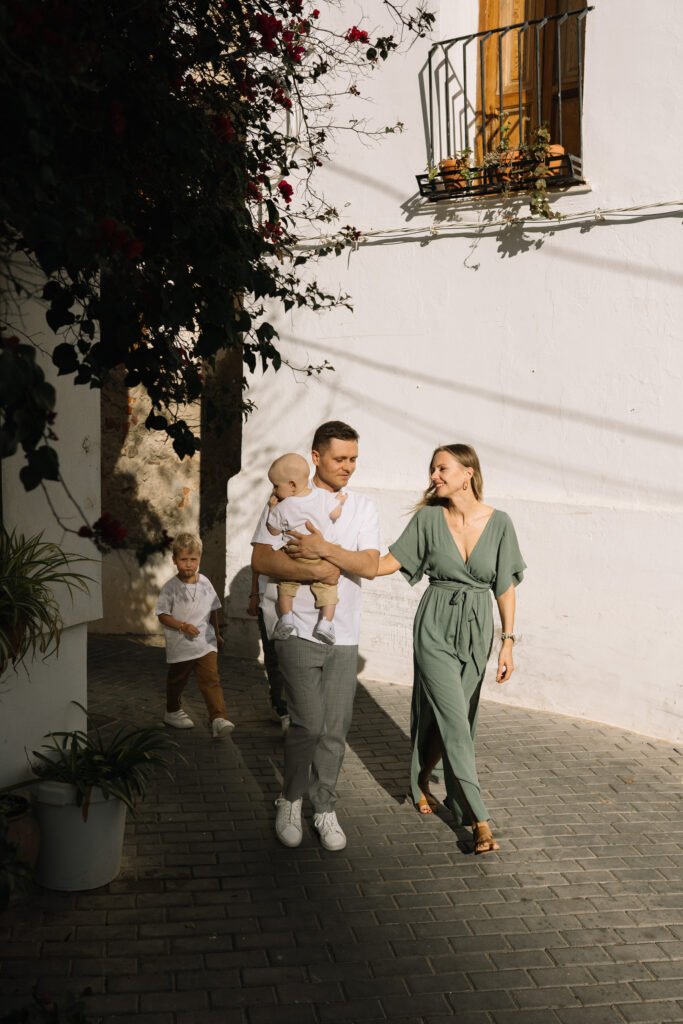
Moving to Spain sounds like a dream for many people — sunshine, sea, relaxed lifestyle and delicious food. But real life as an expat family can be a bit different from what you imagine.
We spent a gap year living in Valencia, and while we truly enjoyed many aspects of life there, there were also things I wish I had known before moving.
Here is an honest look at the real-life pros and cons of moving to Spain, along with plenty of practical information—especially if you are relocating with kids.
Disclaimer: This post reflects my personal experience living in Valencia. Everyone’s relocation journey is different, so others may have completely different experiences.
The Pros of Living in Spain
1. Amazing Outdoor Lifestyle All Year
One of the biggest advantages of living in Spain is the lifestyle outdoors.
You can spend time outside with your kids almost all year round.
There are mountains, beaches, parks, and playgrounds everywhere. No surprise, in many Spanish cities football fields are often more popular than playgrounds, and kids spend a lot of time playing sports.
Almost every area also has a municipal sports center (polideportivo municipal) where you can find tennis courts, swimming pools, gyms, and stadiums at very affordable prices.
For families, this is a huge plus.
You also don’t need an entire wardrobe for every season. Another mega plus.
Our kids wear the same sneakers most of the year. In winter, a light jacket is usually enough in the mornings and evenings, while during the day even in winter a sweater can be enough.
It simplifies life a lot.
2. A Slower Pace of Life
Spain truly has a different rhythm of life.
People are less rushed, evenings are long, and life often happens outdoors. There is generally less social pressure about appearances, brands, cars, or having the newest things.
You can go to a café without feeling dressed up, and nobody really cares if everything in your life looks perfectly polished.
That slower pace can do wonders for your mood and stress levels.
3. Fresh Produce All Year
Another huge advantage is access to fresh fruits and vegetables throughout the year.
Local markets sell seasonal produce, and fruits like oranges, mandarins, peaches, tomatoes, and berries are widely available.
Shopping at small markets or fruit stores often means you get produce that was harvested nearby, which tastes much better than supermarket imports.
My tip: Be aware of shop working hours. On Sundays, shops are closed, so plan your shopping wisely.
4. More Affordable Than Many European Cities
While prices in Spain have been rising in recent years, many areas are still more affordable than large cities in Western Europe.
In some cases, living costs can even be comparable or lower than cities like Vilnius, Prague, or Lisbon.
Housing prices vary a lot by region, but daily living — food, sports facilities, cafés — can still be relatively affordable.
5. Friendly People and a Relaxed Atmosphere
People here are genuinely warm and friendly. They often speak to kids on the street and can easily strike up a conversation.
We had an amazing experience at the International School of El Plantío in Valencia. It follows the British curriculum, and the kids are very well prepared—even at kindergarten age (for them, it’s already school!).
They achieve academic milestones in a light, playful way, with no visible pressure at all.
Having seen different school environments, I feel that here things are a bit calmer, with fewer situations of bullying, and overall a safer space for children.
Although of course every school is different.
6. Less Geopolitical Pressure
It really feels like the world is getting crazy, and world leaders are taking big risks.
Living in Eastern Europe, we are very close to the current war zone in Ukraine, and constant news coverage can create fear and add stress to everyday life.
In Spain, however, people talk much less about war.
The sun, the fiestas, and the relaxed lifestyle seem to take over that pressure, creating a genuine psychological distance from geopolitical tensions.
This can make daily life feel calmer and more peaceful.
Related post: Don’t miss our family’s top surprises, favorite highlights, and easy day trips from Valencia — all about an hour away. You’ll be amazed – 5 Best Day Trips from Valencia, Spain You’ll Love
The Cons of Living in Spain
Of course, there is no 100% perfect place, no matter where we are.
1. Spanish Language Is Essential
One of the biggest surprises for many newcomers is that English is not widely spoken in everyday life.
Knowing just “hola” will not be enough.
You will need at least basic Spanish to handle practical things like:
- calling the bank
- making medical appointments
- contacting immigration offices
- speaking with landlords
Many services still require phone calls, and online systems are not always available.
Another thing to remember: Many government offices close early, sometimes around 1–2 PM, while shopping malls stay open all day.
Also, most stores close on Sundays, so if you run out of something essential like water, sometimes the only place open is a petrol station.
2. Tap Water Is Not Always Drinkable
In some regions of Spain, especially near the coast, tap water has a very strong mineral taste and is not commonly used for drinking.
Therefore, be ready to:
- buy bottled water
- install home water filtration systems
3. Feeling Like a Foreigner
This is a very personal point, but many expats experience it.
Valencia may be the number one expat city in the world (latest rankings!) with many welcoming international communities, but there can still be moments of loneliness or feeling like an outsider, far from your family and long-time friends.
The good news is that you can build new communities.
At your kids’ school or in your neighborhood, you’re likely to meet other families from your country since Valencia is full of expats.
However, it can sometimes be harder to build deep friendships with locals, as many Spanish social circles are long-established.
4. Kids’ Independence Is Different
Another cultural difference relates to children’s independence.
In many Spanish areas:
- parents bring children to school and pick them up
- kids who are new to the country and don’t yet have a safe community rarely go alone to playgrounds or yards in their neighborhood.
As a mom of three boys, it’s really tough for me to stay at home with them, especially since they don’t go outside to play on their own.
Interestingly, in schools you may notice that Spanish kids often stay within Spanish friend groups, while international children form their own mixed groups, even at a very young age.
Our kids, for example, made friends with children from China, Slovakia, Bulgaria, Belarus and Ukraine.
5. Sustainability Is Still Developing
Compared with Northern or Eastern Europe, Spain is still catching up in some sustainability practices.
You may notice more plastic packaging, sugary snacks at children’s parties, and quite a lot of disposable items at celebrations.
Another thing to be prepared for is bureaucracy.
Many official processes still require phone calls, printed documents, and in-person visits.
It’s common to face long queues at government offices, and appointments can take time to get.
A little patience and extra copies of documents can save you a lot of stress.
6. Food and Housing Quality Can Be Inconsistent
While fresh produce is excellent, restaurant and café food is sometimes very oily or sugary.
Housing quality can also vary. Some apartments have very basic insulation and windows, almost like summer houses.
This becomes noticeable in winter.
7. Staying Connected to Your Roots
I personally think it’s amazing for kids to experience new cultures, but I also feel it’s important they cherish their roots.
Maybe that’s a bit old-fashioned, I’m not sure, but it matters to me that my kids remember our culture while learning new ones.
This usually means seeking out communities that speak your language, connecting with other families, and celebrating your own cultural traditions together.
It helps keep those roots alive while living abroad.
8. Very Hot Summers or Lockdowns Due to Rain
Spanish summers can get really, really hot, which usually means the kids are stuck at home. On top of that, after the tragic floods in 2024, the authorities (AESMT) have become more cautious and sometimes close schools and playgrounds if there’s a risk of floods.
During the hottest months, many families end up:
- staying indoors most of the day
- only going out early in the morning or late in the evening
With the kids at home during school holidays, it can get a bit challenging.
That’s why many expat families either travel north or go back home for the summer—just to get a little break from the heat and the lockdowns.
Important practical information that can save you both time and nerves.
Important Things When Choosing a Home
Before we moved, I wish someone had given me these tips—they would have made life so much easier!
Finding housing in Spain can be trickier than you’d expect, especially with the rising demand from people relocating here in recent years.
Here are a few things I learned the hard way:
1. Work With a Reliable Agent
Many landlords are hesitant to rent to foreigners, especially if your income comes from another country. A good real estate agent can make a huge difference—they act as a mediator between you and the landlord, help sort all the paperwork, and reduce the risk of falling into a scam.
Sometimes landlords also ask for 6–12 months’ deposit or guarantees if your income isn’t Spanish, so having an experienced agent on your side is a real lifesaver.
2. Choose the Right Orientation
Home orientation matters more than you might think.
South-east facing homes are often ideal—they get more sunlight and feel warmer during the winter months.
3. Heating Matters
Even though Spain is warm, winter mornings and evenings can feel surprisingly chilly inside homes. Many buildings don’t have central heating, so if you can, look for homes with:
- Gas heating
- Good insulation
Electric heating can be expensive and might not warm the house properly.
High humidity can also be an issue, so it’s worth checking before you move in.
4. Building Age
Homes built around 2000–2010 or newer usually have better insulation and construction quality.
Older buildings may have more problems with humidity or pests. Yes, cockroaches can appear in some areas, especially near drains or in older buildings.
5. Flood Risk
After the tragic 2024 floods in the Valencia region, flood risk has become something to seriously consider.
If you’re buying a property or searching one for rent, avoid low areas near rivers or dry river channels (barrancos).
Homes on slightly higher ground or hills are usually safer and give more peace of mind.
Okay, now for some boring but really important stuff – the paperwork. Trust me, getting these things sorted early will save you a lot of stress later.
Before You Move
Here’s what’s super helpful to have ready before you arrive:
- NIE number – you’ll need this for pretty much everything in Spain. I got ours through the local Spanish Embassy, which made the process much easier.
- Work contracts – have them on hand if you can.
- Tenant profile – if you plan to rent, prepare proof of income, references, and a 12-month financial statement.
- Tax declarations – having them in English is handy for landlords or agencies.
- Personal documents – some may need to be translated into Spanish, like marriage or birth certificates if you’re registering your newborn children.
- EU Health Insurance Cards – make sure everyone in your family has them.
Upon Arrival
Once you’re here, these are the first things to sort out:
- Get a Spanish phone number – essential for everything from school registration to doctor appointments.
- Open a bank account – online options are limited, so having local contacts helps.
- View apartments with someone you trust and who speaks Spanish – like a reliable broker. It makes life so much easier when renting or buying.
- Register your address (empadronamiento) – which means registering your address at the local city hall (Ayuntamiento). This document confirms that you live in that municipality and is needed for many things such as enrolling children in public schools or accessing public healthcare.
- Certificado de Registro de Ciudadano de la Unión (the green certificate many foreigners have) – The document confirms you are registered as an EU resident in Spain. You get it from the Policía Nacional – Oficina de Extranjería and usually need your passport or ID, NIE number, empadronamiento, proof of income or savings, and health insurance; it’s normally applied for once you’ve lived in Spain for more than three months.
- Visit your local health center (Centro de Salud) – to get your SIP card, which links you to the public healthcare system.
- Check out schools – make appointments and see which ones might be the best fit for your kids.
Being physically present often makes these steps much easier.
Once you’re ready to do some sightseeing in Valencia, check out my post “The Ultimate Travel Guide to Valencia, Spain” for the 25 best attractions in the city.
Typical Costs to Expect
When it comes to buying property in Spain, there are a few extra costs to keep in mind. For secondary market homes, plan for about 10–12% on top of the purchase price, and for new builds, it can be 13–15%. This usually covers taxes, notary fees, and registration costs.
If you’re renting, there are also some extra expenses to consider:
- Tenant insurance approval – in our experience, this was required by the landlord. Basically, the insurance company checks your financial profile and tells the landlord if you’re an acceptable tenant. We paid for it ourselves, which was around €1,000, but it made the whole process much smoother and gave the landlord confidence.
- Property insurance – roughly €600 per year.
- Private health insurance – if you need it, expect about €150–200 per month for a family.
- Monthly utilities – It’s always a good idea to check approximate costs with the owner beforehand, since utility bills can differ a lot from one household to another.
Additionally, if you need it – Private health insurance, expect about €150–200 per month for a family.
In short: whether you’re buying or renting, it’s good to plan for these extra costs early so nothing takes you by surprise.
Knowing them ahead of time saves stress, money, and headaches and trust me, it makes settling into a new country much easier!
Final Thoughts
Moving to Spain can be a really nice lifestyle change – especially for families who value sunshine, outdoor living, and a slower, less stressful pace of life.
But like any big relocation, it also comes with its challenges. Language barriers, paperwork, and cultural differences can take some time to get used to.
The key is to arrive with realistic expectations and be open to creating a new rhythm of life.
For us, Spain has been a beautiful adventure. It’s where our third son was born, where we created many unforgettable family memories, and a place that will always hold a special place in our hearts.
Thinking about moving to Valencia or already planning your expat journey? Drop your questions in the comments or share your experience — I’d love to hear your story!
And don’t forget to save this post or share it with someone thinking about life in Spain.
Save The Pin To Your Pinterest Board:




Leave a Reply